How to Become an AI Application Tester

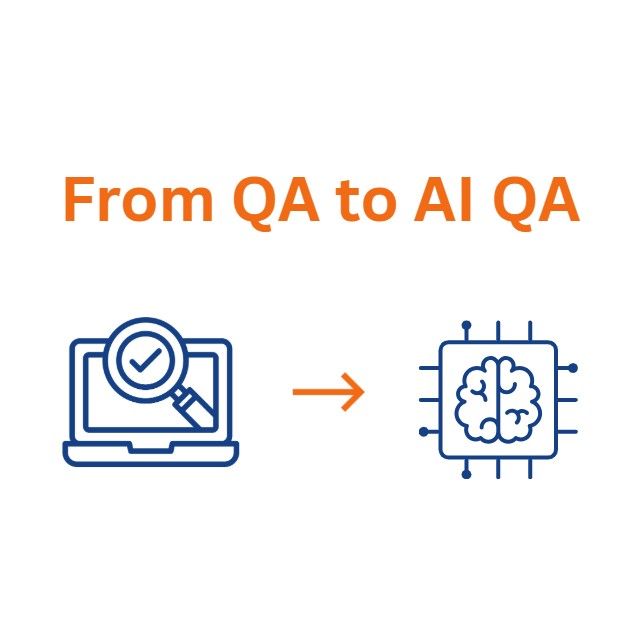
If you are an Automation QA looking to transition into the world of Quality Assurance for AI applications*, like I did, I hope my journey can serve as a roadmap for you.
*not to be confused with the use of AI tools for testing classic applications
Some time ago, I decided to pivot. It wasn’t an overnight change; it was a deliberate, sometimes difficult, but incredibly rewarding process. Here is how I closed the gap:
The time investment: About 7 months of reading theory and, in parallel, about 1+ year of hands-on experience. I spent that year participating in startup projects, mostly as a QA Lead, which gave me a “safe” sandbox to apply ML learning to practical, real-world tasks.
1. The Python pivot
For example, Java is great, but in the ML/AI ecosystem, Python is the lingua franca. Model libraries, statistics, metrics, and transformers are simply superior. So if you’re a Java QA, you’d better leave Java for Python.
2. Building a Theoretical Foundation
You can’t evaluate what you don’t understand. I had to learn how models are built from the ground up to understand how to measure them.
- This free course was really great, interesting, and exciting for me, thank you, Dr. Raj Abhijit Dandekar!
- My previous post-graduate studies in applied linguistics helped me here a bit, but some math and architecture were a fresh challenge for me.
- Besides, I read many other materials, for example, regarding LLM evaluation, and of course communicated with Gemini, the “iron friend” a lot 🙂
3. The market is currently challenging
, but I chose to see it as a free education. In parallel with my “upgrade”, I completed nearly 10 technical test tasks for potential employers. Even the ones that didn’t lead to a job added a new metric or a new evaluation technique to my toolkit.